Wednesday, November 27, 2013

Passing Through

On November 9, I drove into the lot at Park Road to begin a Wildwood walk with my camera. Just as I opened my door, I glimpsed an unusual bicycle exiting the park. "Hey!" I shouted. "Could I please take your picture?" The rider looked a bit surprised, but he stopped and said, "Sure." Getting my camera out of its case, I continued, "and I want you to go back down the path and ride back toward me." He looked a bit puzzled. "I want a picture of you in Wildwood Park for my blog and albums." "Oh, okay!"


He cheerfully did what I had asked and even gave me a big smile and wave as he got closer to the camera.


When he stopped behind my car, I took a closer look at all the "stuff" on his bike. "You aren't local, are you?" "No", he replied. "Where have you come from?" "San Diego." "California?"
                                                     Wow, that sure piqued my curiosity!
His bike was a recumbent but different from others that I had seen. Instead of a smaller wheel in front, both tires were the same size. "It requires fewer supplies for fixing flat tires and broken spokes when one size fits all," Mark explained.
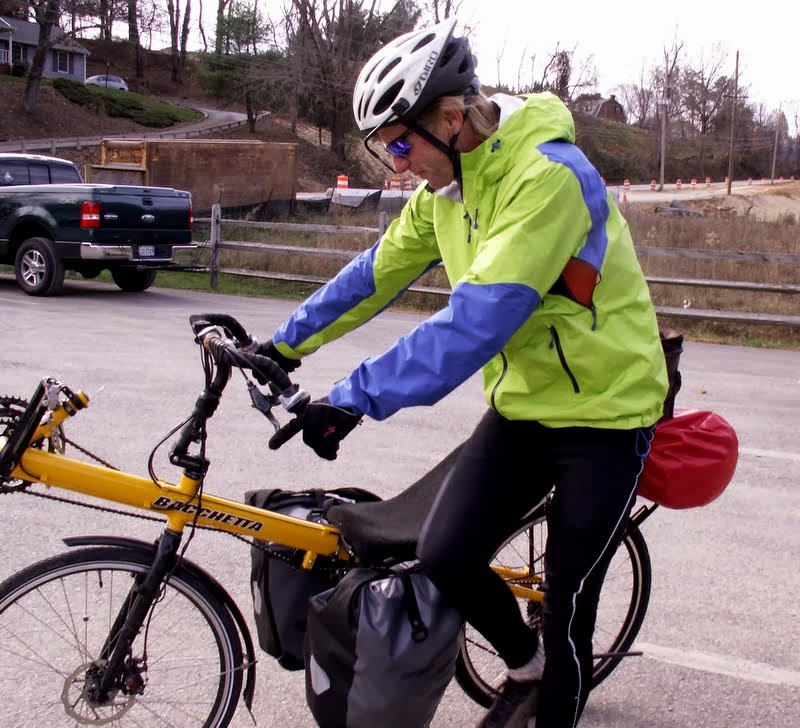


Mark Doumas and his wife Sandy live in Tucson, AZ. He has a sister living in San Diego and one in  Newport News, VA. The couple decided to tour across the United States, starting at the Pacific Ocean and ending at the Atlantic. Their website title Sea2Sea,Sister2Sister pretty well summarizes what they had set out to do.
Mark also added another connection to his passage through our city. His sister Jennifer, the one in California, was born in Radford! Their dad was a student at V.P.I., and the family was living in Blacksburg.

Mark mentioned that he was very favorably impressed with Radford's network of bike trails so I told him about Pathways for Radford and their efforts and hard work in building and maintaining those bike-ways.
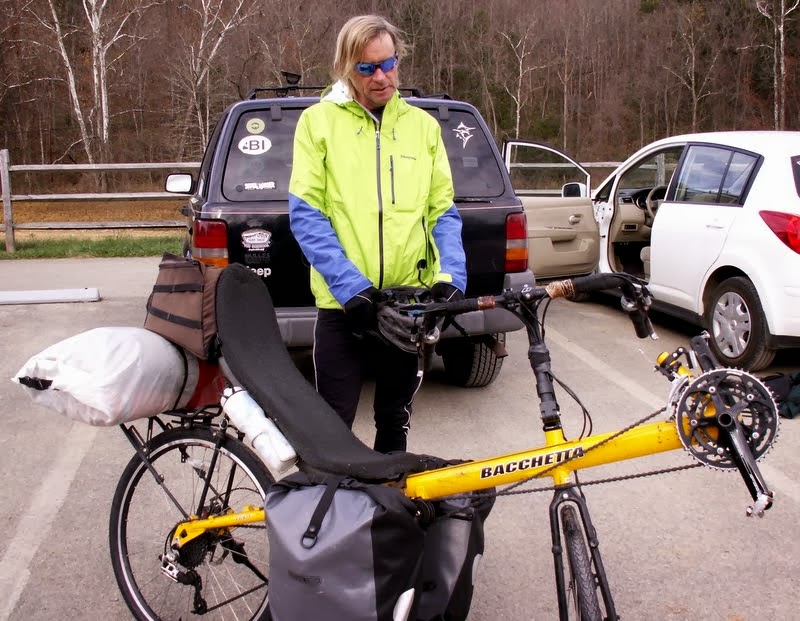


The couple had driven their car with bikes on racks from their home in Tucson to San Diego where they visited with family, dipped the back tires of their bikes in the Pacific and set out across the country. When they got to St. Louis, Sandy decided that she was tired of biking and that she would rather visit with her family there. Mark would continue on by himself, writing in an online journal that they had started at the beginning of their trip, and Sandy would be able to follow his progress.
Sandy later flew back to Tucson, drove back to the mid-west to pick up her bike that she had left with family, and continued on to meet up with Mark on the Blue Ridge Parkway. She biked with him and they enjoyed the fall scenery in that area. She then drove the car to Newport News and then finished biking to the Atlantic with Mark. One of  the last journal photos shows his front tire in the Atlantic Ocean on November 18 and smiles on all faces as they were joined by family on the beach.

Mark posted one of the photos of his Wildwood ride in his journal. You can see it by clicking this link and scrolling down to the 4th photo. Be sure to read his comment above the picture:

http://www.crazyguyonabike.com/doc/page/?o=1&page_id=351411&v=1I


I had the excitement of sharing a bicycle tour across our great country as a result of a simple visit to Wildwood Park. What a great place!



Monday, November 18, 2013

Luna

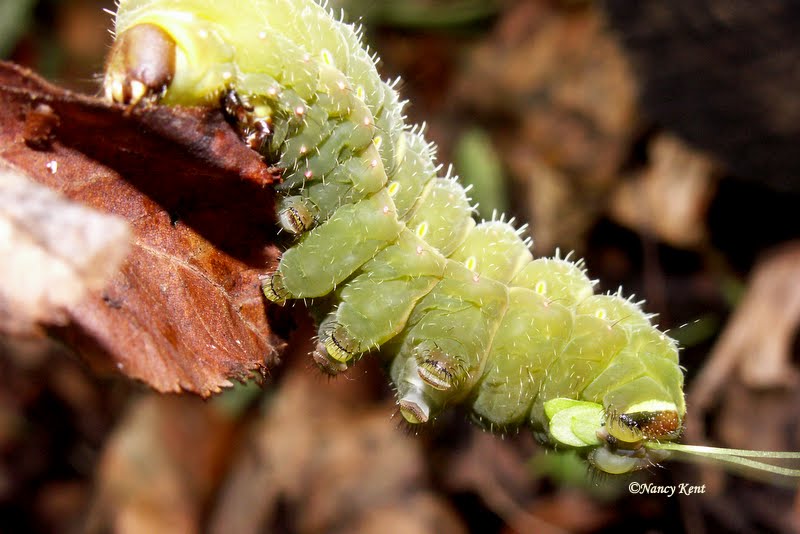
On September 20, 2011, I decided to take a quick walk along the trail that leads to Radford High School and up to Main Street. I wanted to get more photos of mushrooms that I had seen there. As I searched among the the plants and brush, I spied a huge, neon green caterpillar crawling slowly over a log. I immediately began snapping!


I didn't know what kind of caterpillar I had found, but finding its identity was not difficult. After I put the images into my computer, I just searched for "big green caterpillar" online and saw that it was Luna (Actias luna).

Those images also let me see details of the critter's suction-cup feet :


                                                                 And also of its "face":


I knew that it would become a magnificently big Luna Moth - one of the largest moths that fly in North America. I had seen a couple of those, but never in Wildwood Park. I wished that I could find one. Summer turned to fall - I was disappointed that I did not find a Luna there. 2012 came and went - still no huge moth.

One Saturday morning this past August, I headed with my camera down the bike path to check the restroom
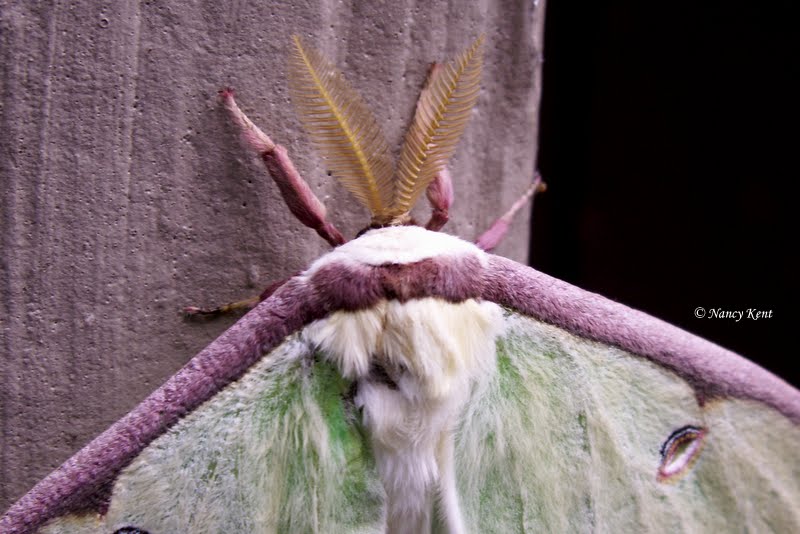
wall.There it was!


    I had waited for two long years. The delicately lovely creature took my breath away...


                                                        Even its antennae were huge!


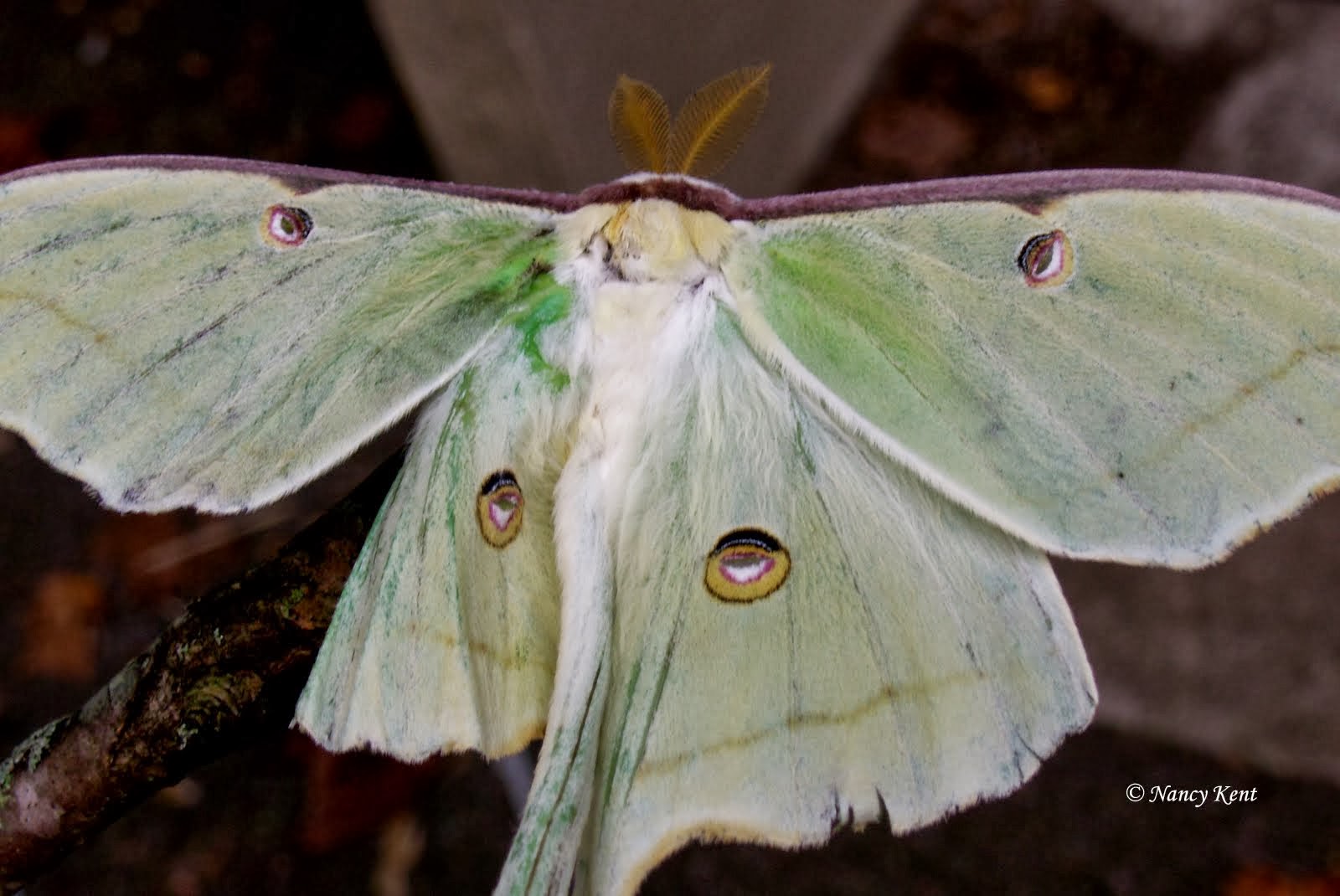
Because these moths are nocturnal, they are not often seen during the day. As adults, they do not eat, in fact, they do not even have mouths. Therefore they live for only a week or so. They are members of the Saturniidae family. That name refers to the eyespots that resemble the planet Saturn and its rings. Those spots also look like the moon - Luna is the Latin word for "moon".


My friend Clyde Kessler came by while I was snapping photos. He decided that the moth needed to be moved from the wall to a more protected area. When he coaxed the creature onto a stick, it spread its wings and all four eyespots were visible. The long wait had ended with an awe-filled reward.


   I learn many lessons as I explore Wildwood. Perhaps one of the most valuable is patience.


Saturday, November 9, 2013

Likin' Lichens!


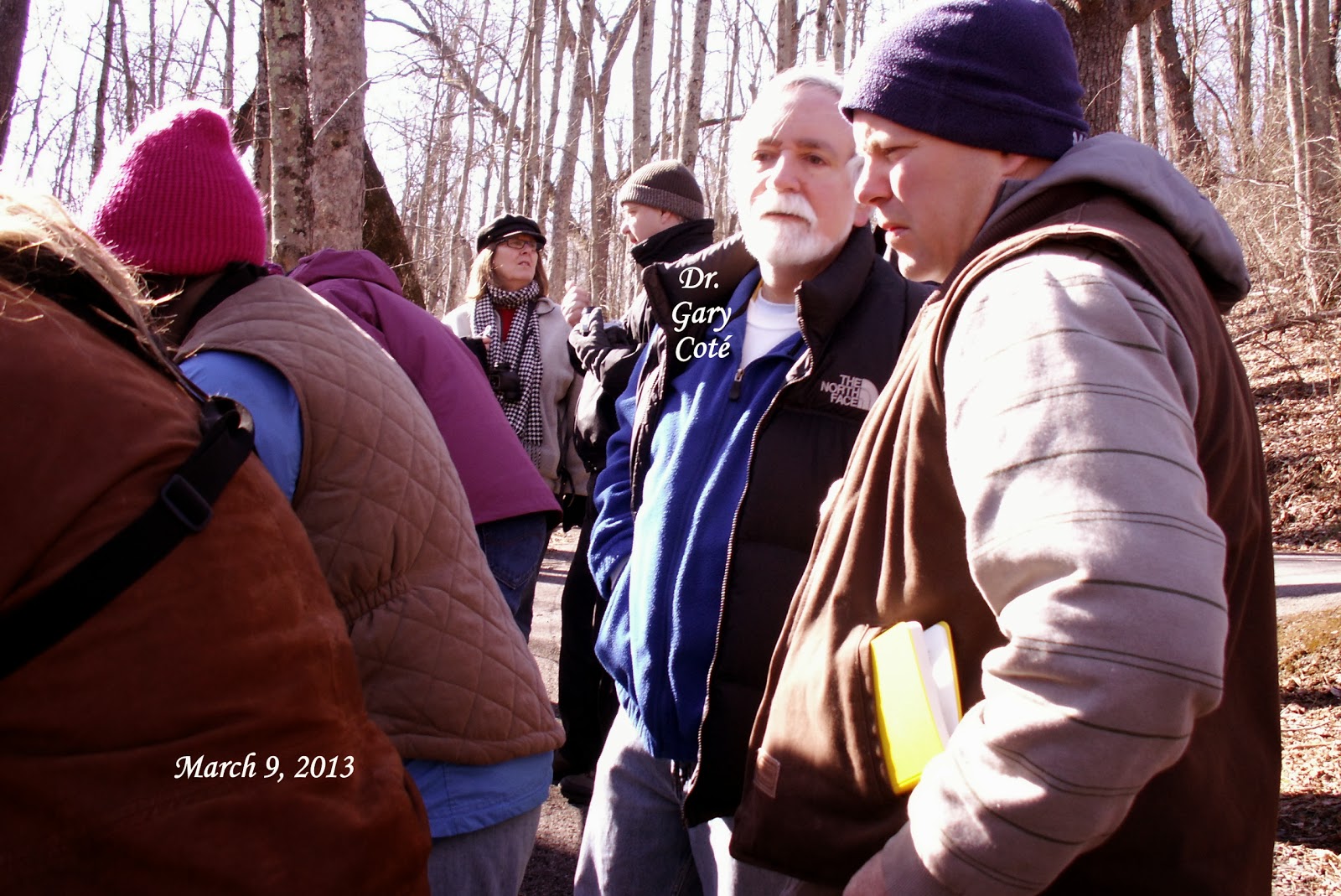
On March 9, 2013, Dr. Gary Coté conducted a Lichen Walk through Wildwood Park and shared the location and description of several species. He had pointed out several to me before then, and I had begun to see that lichens were more than just some green stuff on the trunks of some trees so I was eager to look for more. We were joined by others who were ready for the hunt on a cold, sunny day.


Several folks, young and old, lined up along the fence to find lichens growing there. Because I had seen those species, I stood back to allow others to take a close look at the wooden rails, and I got  a few pictures of the group.


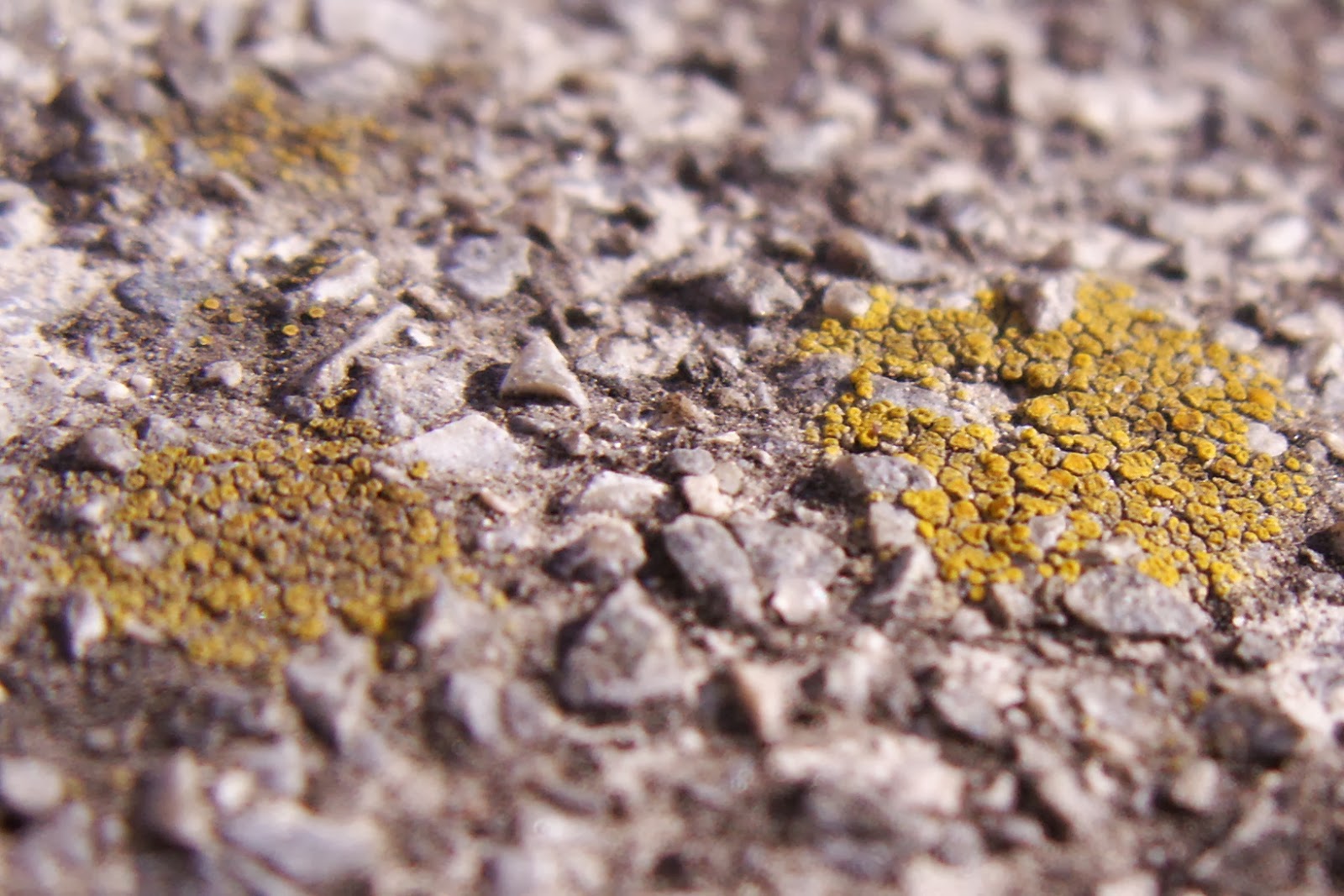
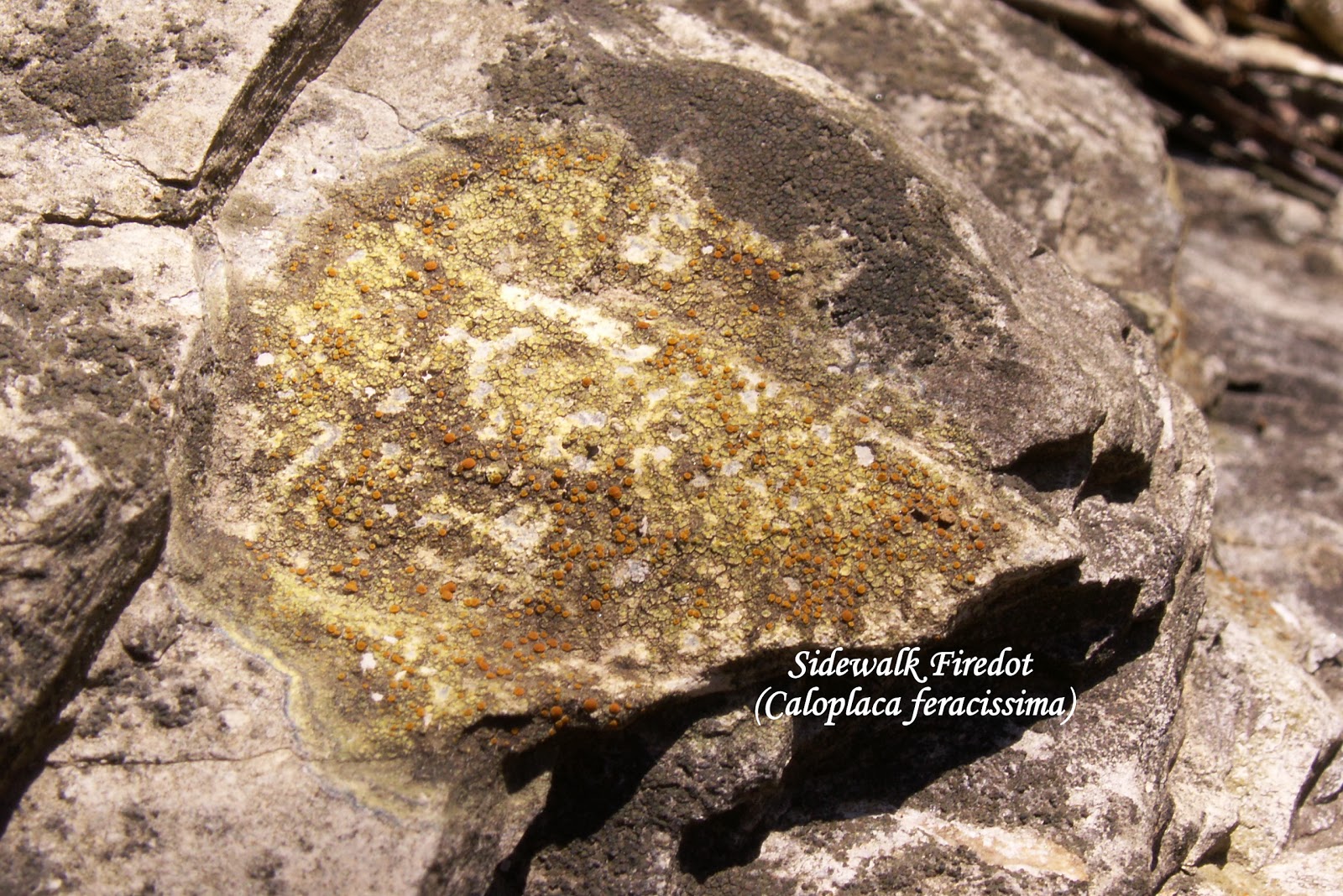
As we walked along the paved bike path, Gary showed us bright orange lichens that like to grow on sidewalks and other hard surfaces - Sidewalk Firedot (Caloplaca feracissima). The location makes the name easy to remember.


We also found some growing on a rock. The name doesn't change just because the location does!


We found a tree that looked as if its trunk had been sprinkled with a bright yellow powder. Dr. Coté said that we had found Lemon Lichen (Candelaria concolor). Yes, that was also a very descriptive name.


We found one more lichen that I had seen before but had not known the name - Rim Lichen (Lecanora). It was on a tree limb and was easy to spot because it had a circle of white around it - another easy to remember name.


Walking through Wildwood Park with a camera is always pleasant, but that day was especially fun because I shared it with others who were interested in making new discoveries and with a knowledgeable guide to explain what we had found.


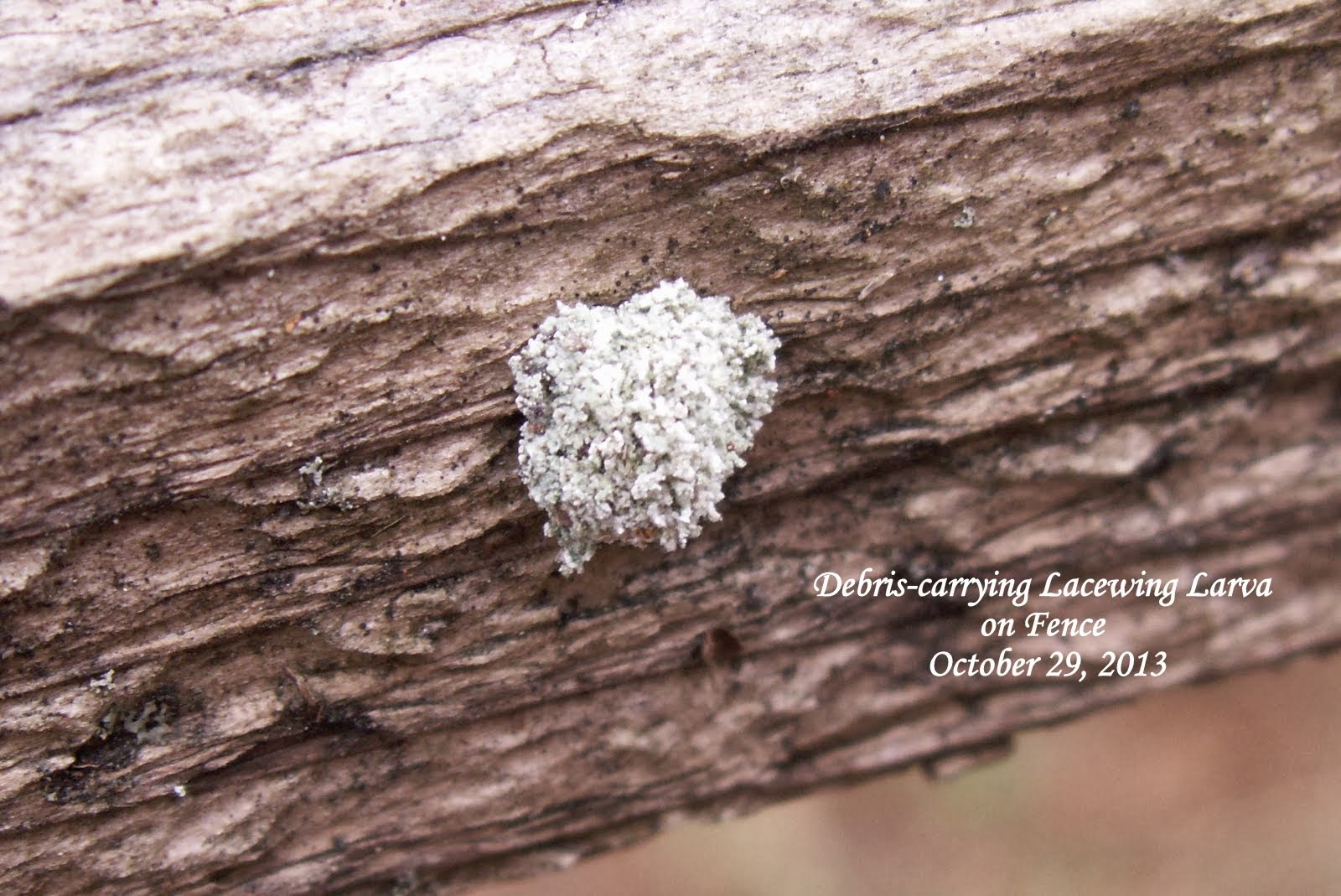
Just recently, I saw a tiny chunk of lichen on a fence rail near the tunnel entrance. It was moving - but a lichen is not an animal! Then I remembered the debris-carrying larva of the Green Lacewing (Chrysopidae). Those little critters cover themselves with lichen pieces  - makes wonderful camouflage - how clever!


                                              Yes, I'm likin' lichens even more than ever!!!


Wednesday, March 6, 2013

Of all the gall!


I had taken a photo of a gall on Wingstem last September
and sent it to Bug Guide for identification. I didn't get an
immediate response and had forgotten about it so I was 
very pleased to receive a notice about it this week. It is a gall 
made by a midge, Neolasiotera incisa Plakidas -1994.
The really exciting part of this is that John Plakidas sent
the notice, and he also named the tiny midge that 
formed the gall!
He also explained that he had published a paper in 1994
about the two species of Neolasiotera that make their
homes on Wingstem, (Verbesina alternifolia). N. incisa
forms galls on branchlets and N. verbisinae Mohn  
uses the main stem of the plant.


Insect galls are formed by tiny creatures that are herbivores
(plant eaters). Each gall serves as the habitat, shelter, 
and food source for the insects that form it. The larvae or 
the adults inject chemicals  into the stem or other parts 
of the plant causing tissues to swell and form a gall. Larvae
develop in the gall and live there until they become fully
grown, and then they leave.

Other galls that I have found in Wildwood include 
another midge, Schizomomyia eupatoriflorae
on White Snakeroot:


One other midge gall is Polystepha pilulae Beutenmuller-1892
on an Oak leaf :


A wasp forms the Larger Empty Oak Apple gall,
(Amphibolips quercusinanis) which is very plain on the
 outside and has an lovely interior structure (see the 
white spikes on the left side of the photo). I took 
the gall apart when I found it lying on the ground 
so that I could get a good shot of both parts:


Another wasp, Diastrophus nebulosus, makes its home on
Blackberry stems.


Aphids also sometimes form galls such as the Elm Sack
gall, Tetraneura ulmi, that I found on an Elm leaf:


Galls are worth a closer look!


Saturday, February 2, 2013

February 2, 2013

Please note: Be sure to look at earlier articles, especially the
 lovely Site Section butterfly poster in the article titled
Wednesday, January 30, 2013.
You can help support the
Blue Ridge Discovery Center by purchasing a poster and have
a permanent view of spring and summer treasures, too!


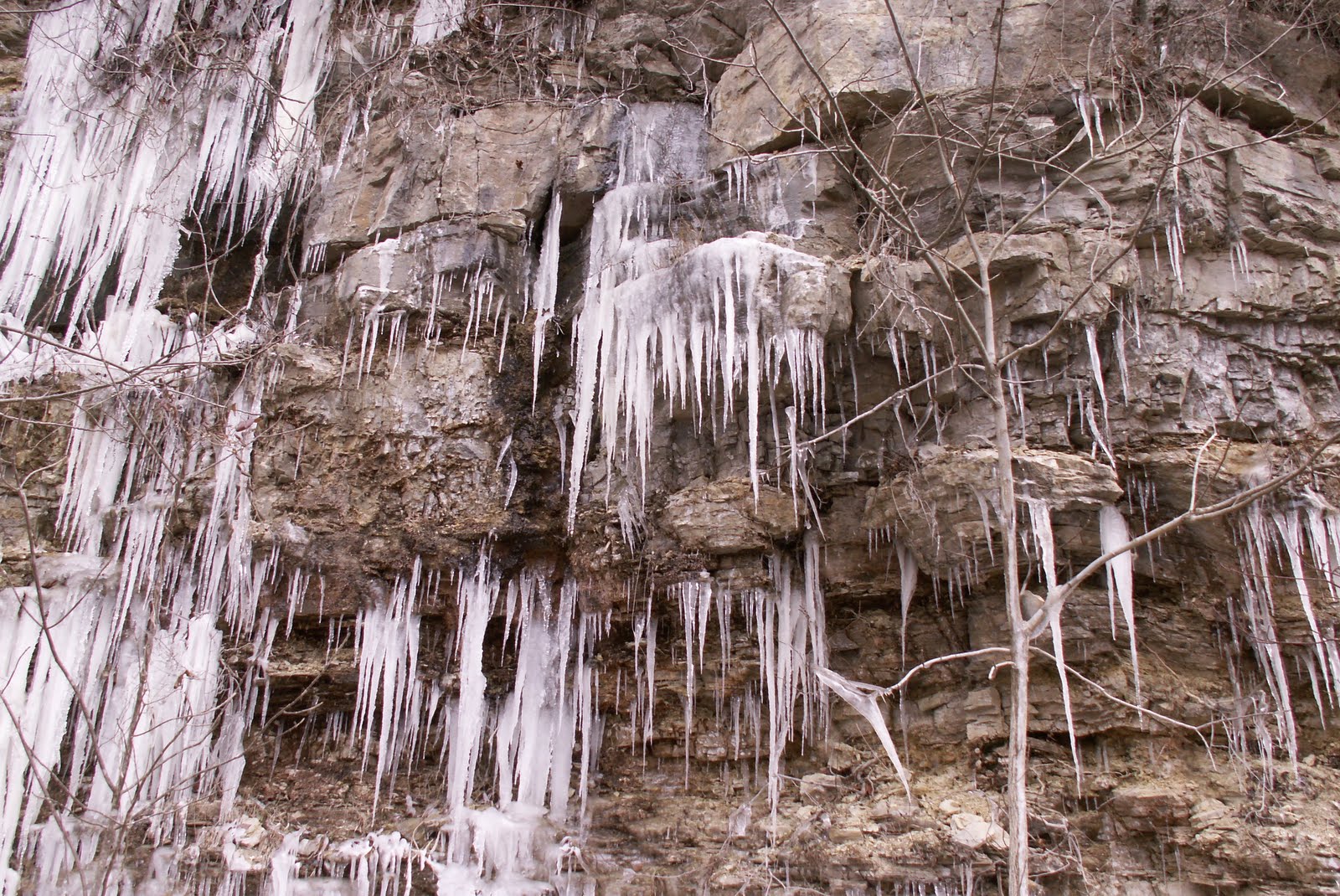
By Saturday, the air was again cold and crisp. A new ice show was on display 
as also were doggie fashions:


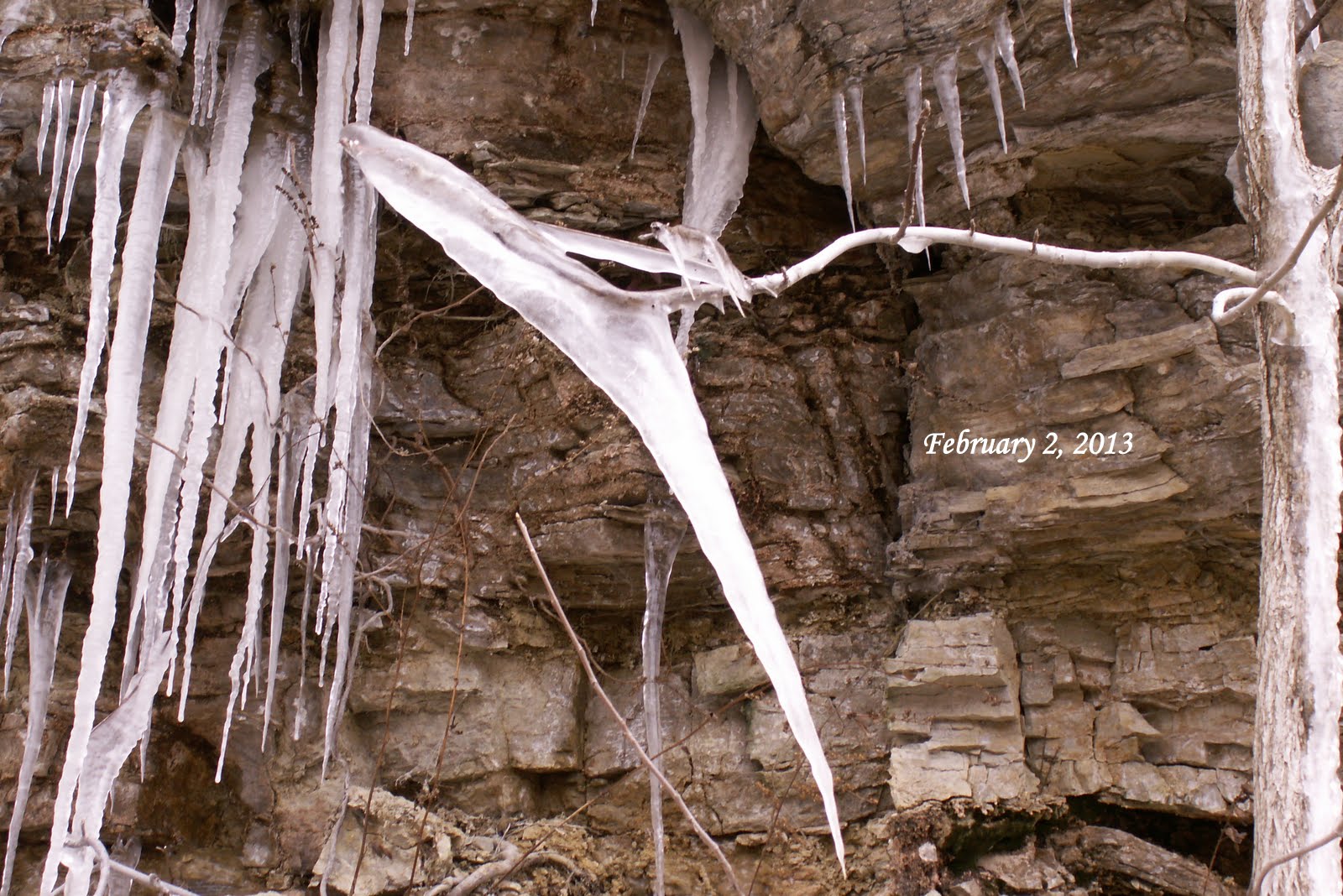
The photo below shows a close up of  ice spread across a small
tree branch. Can you find that same spread ice in the photo above?


January 31

January ended with another storm that brought rains that 
filled streams and rivers until they swelled out of their 
banks and beyond their flood plains. 
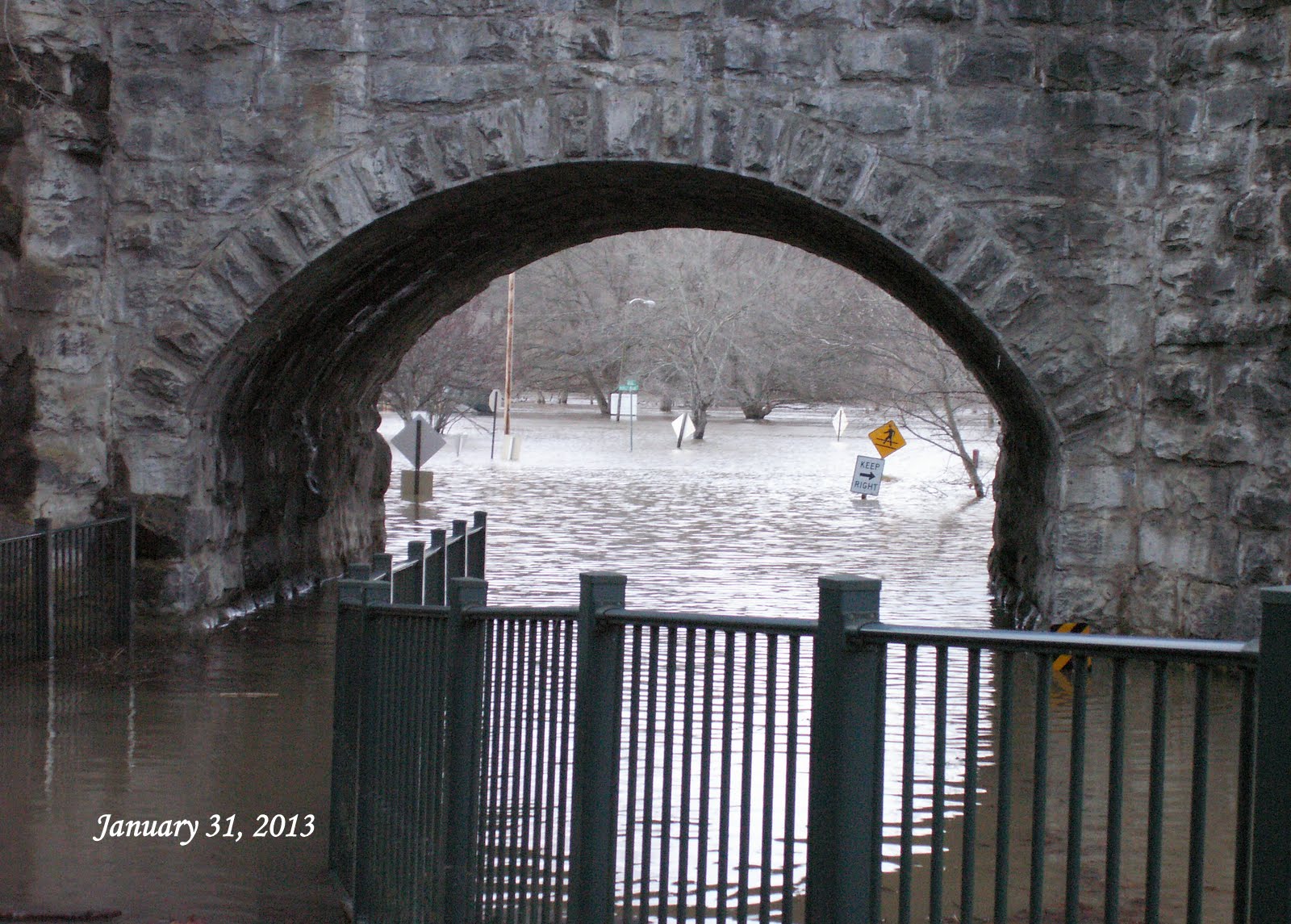
On Thursday afternoon, I as walked  through the 
tunnel in Wildwood and  looked out toward Bisset Park,
I could see that the New River had moved its edge 
beyond the train underpass:


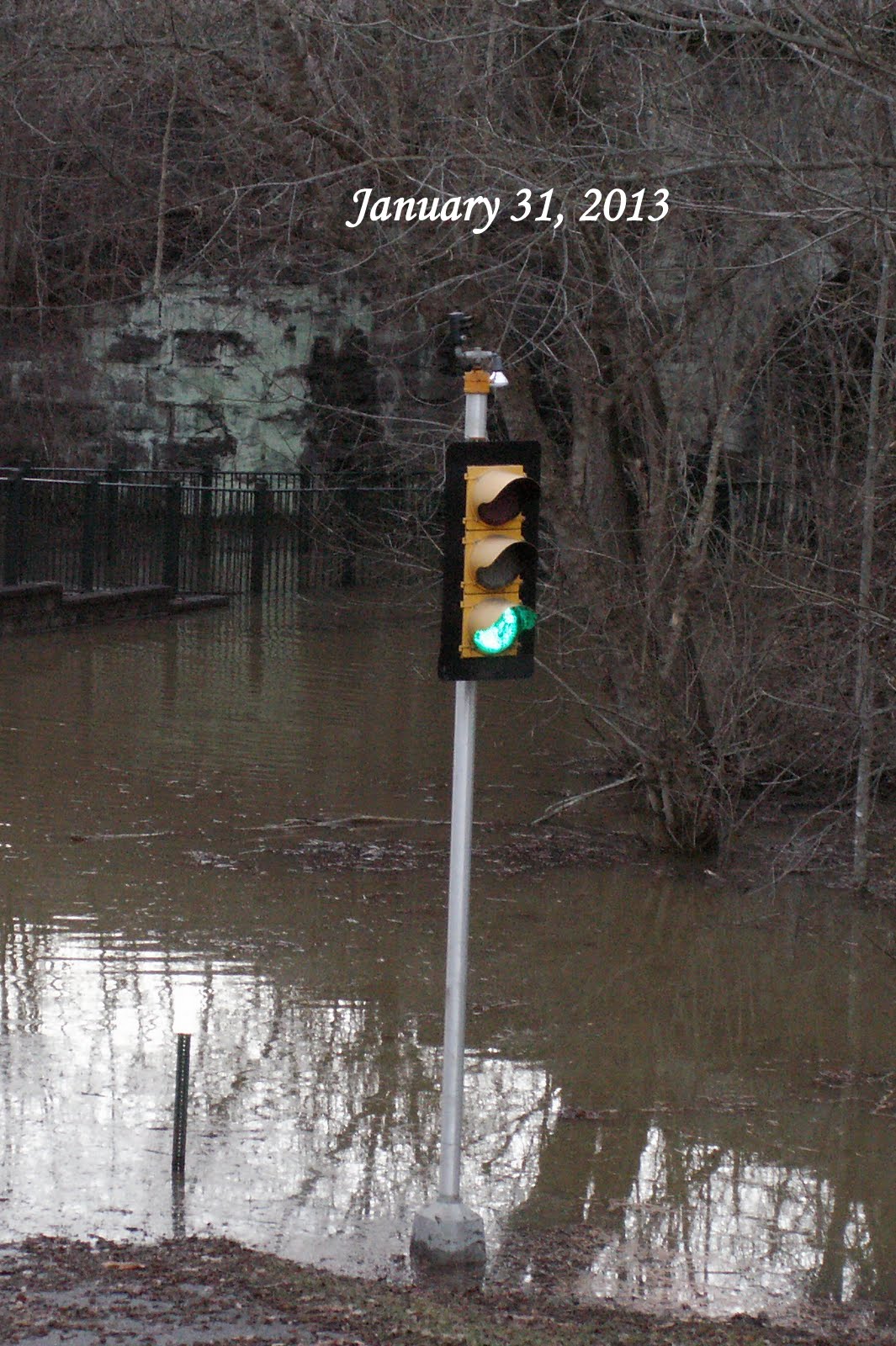
The signal light remained on green because no vehicles could
travel over the the water-covered road:


I had reached the end of the path for that day.


January 26 - 29

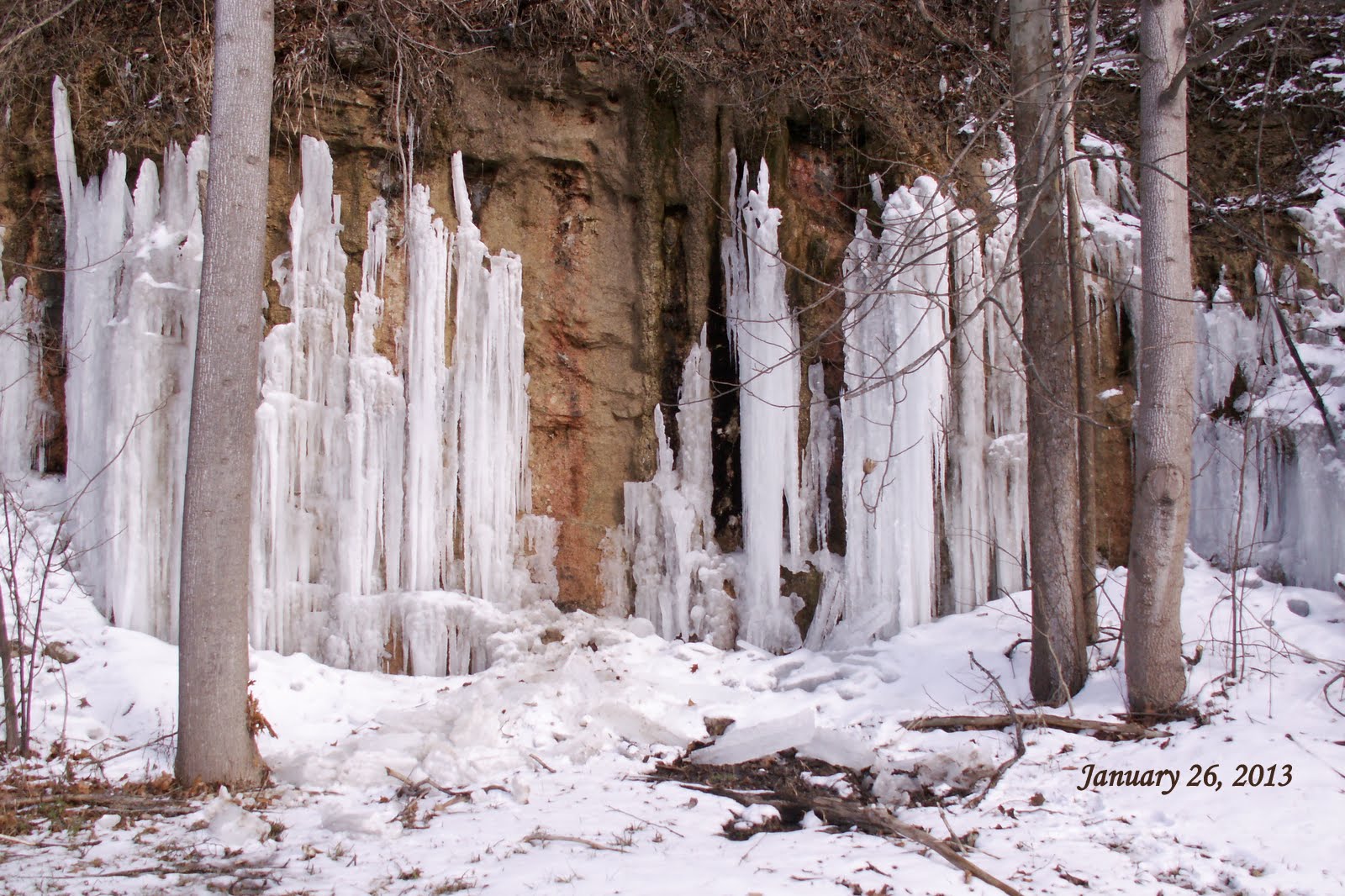
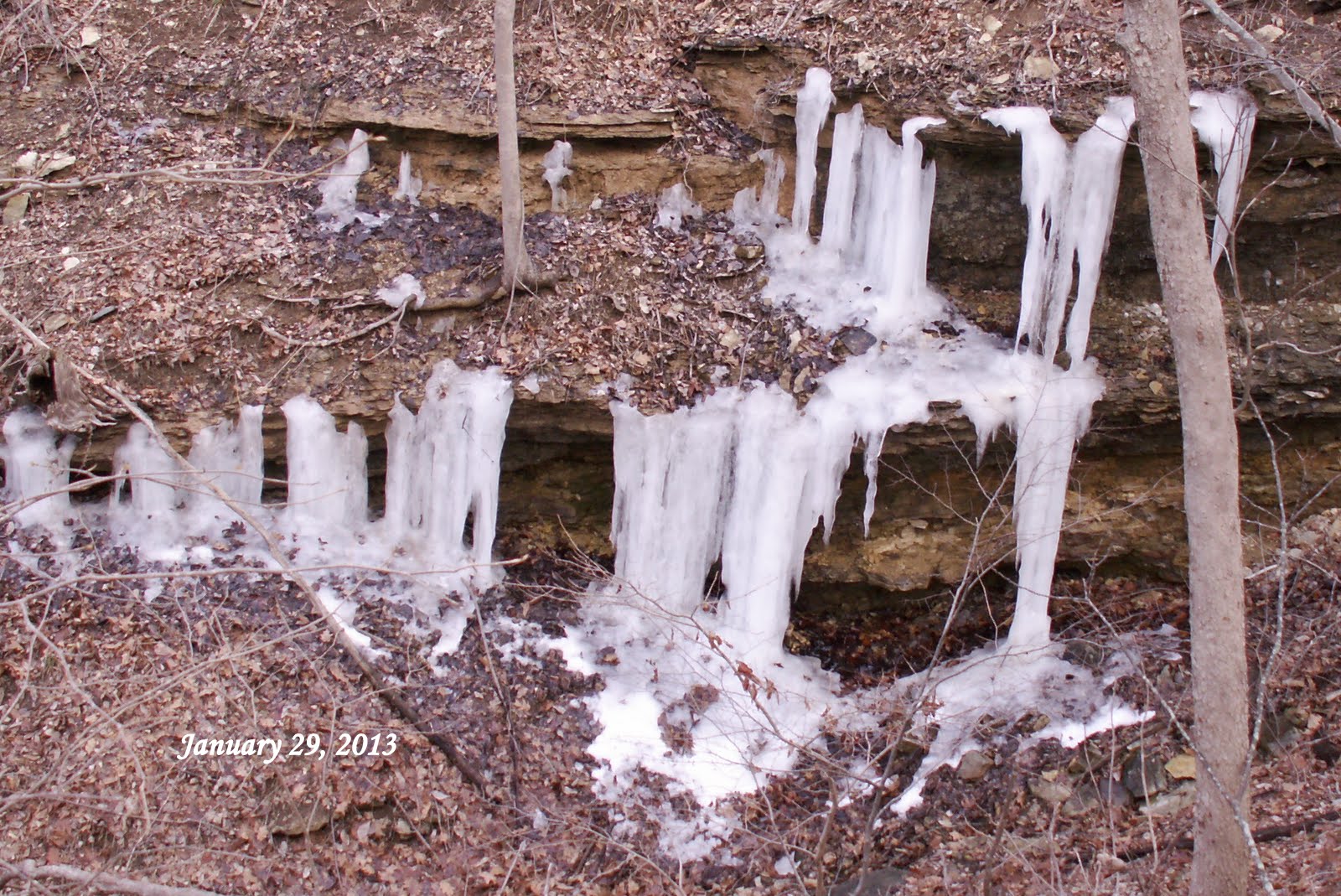
As the temperatures begin to warm a bit, the ice and
snow begin to melt:


The trail that goes up the Grand Staircase and on up the
east slope passes by a ravine where icicles form away
from the warm rays of the sun.


A day of unusually warm winter weather makes the
ice disappear quickly: