Thursday, August 9, 2012

Cup Plants Burst into Wildwood!

Cup Plants are now in full flower along the creek in the center of Wildwood Park.
They are huge  - some are eight feet high! 
It looks as if the sky has turned upside down and the sun is shining up from the earth.


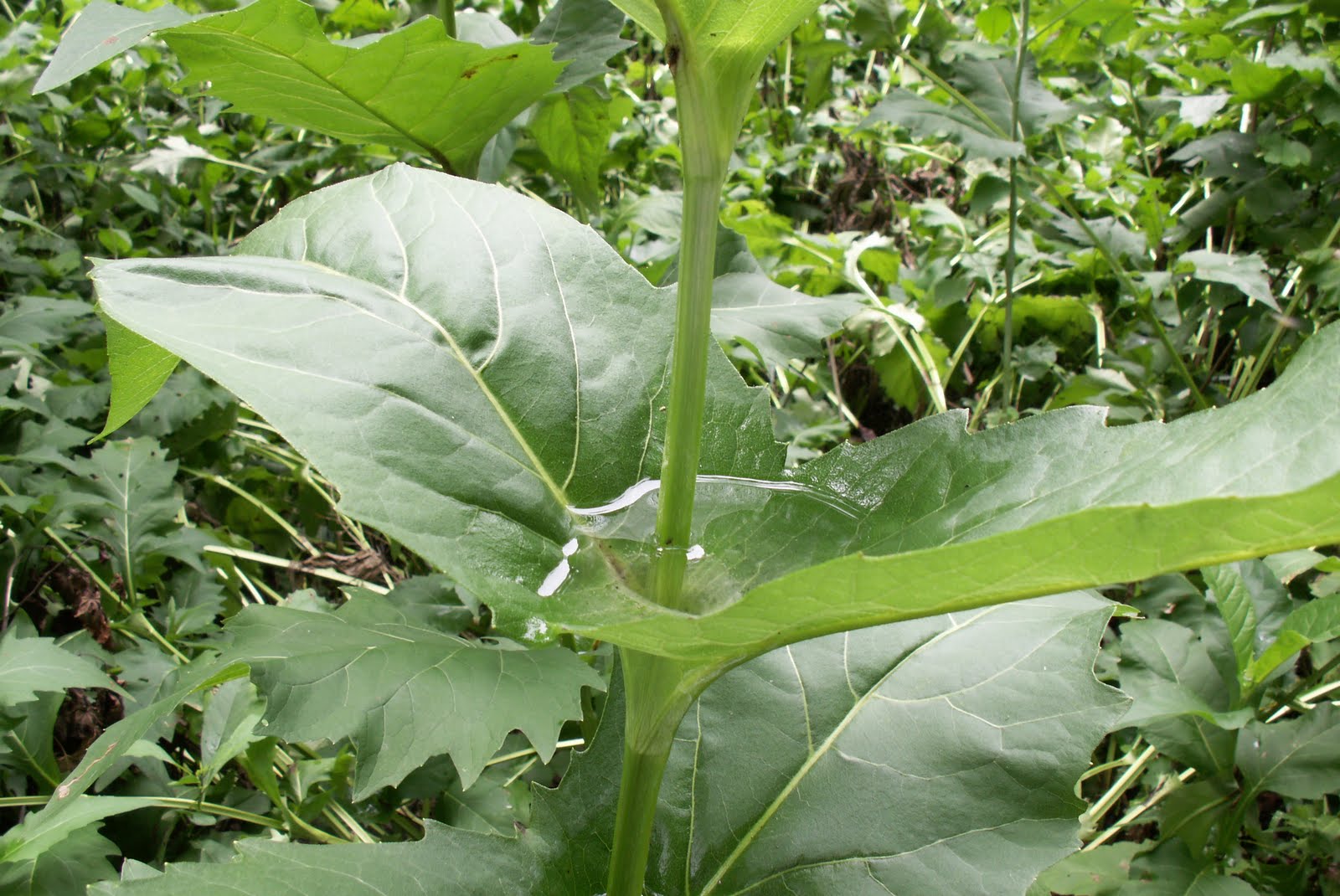
Remember that these plants get their name from the "cup" that their leaves form as the stem pushes through or "perfoliates" their center.

Many insects have found them and are fluttering and buzzing around them. 
Honey bees fill their pollen buckets. I think those buckets look more like orange boots.


A tiny Scudder's Bush Katydid nymph must be a bit overwhelmed when he finds himself at the center of a bloom.


A Thick-headed Fly stops by for a sip of nectar.


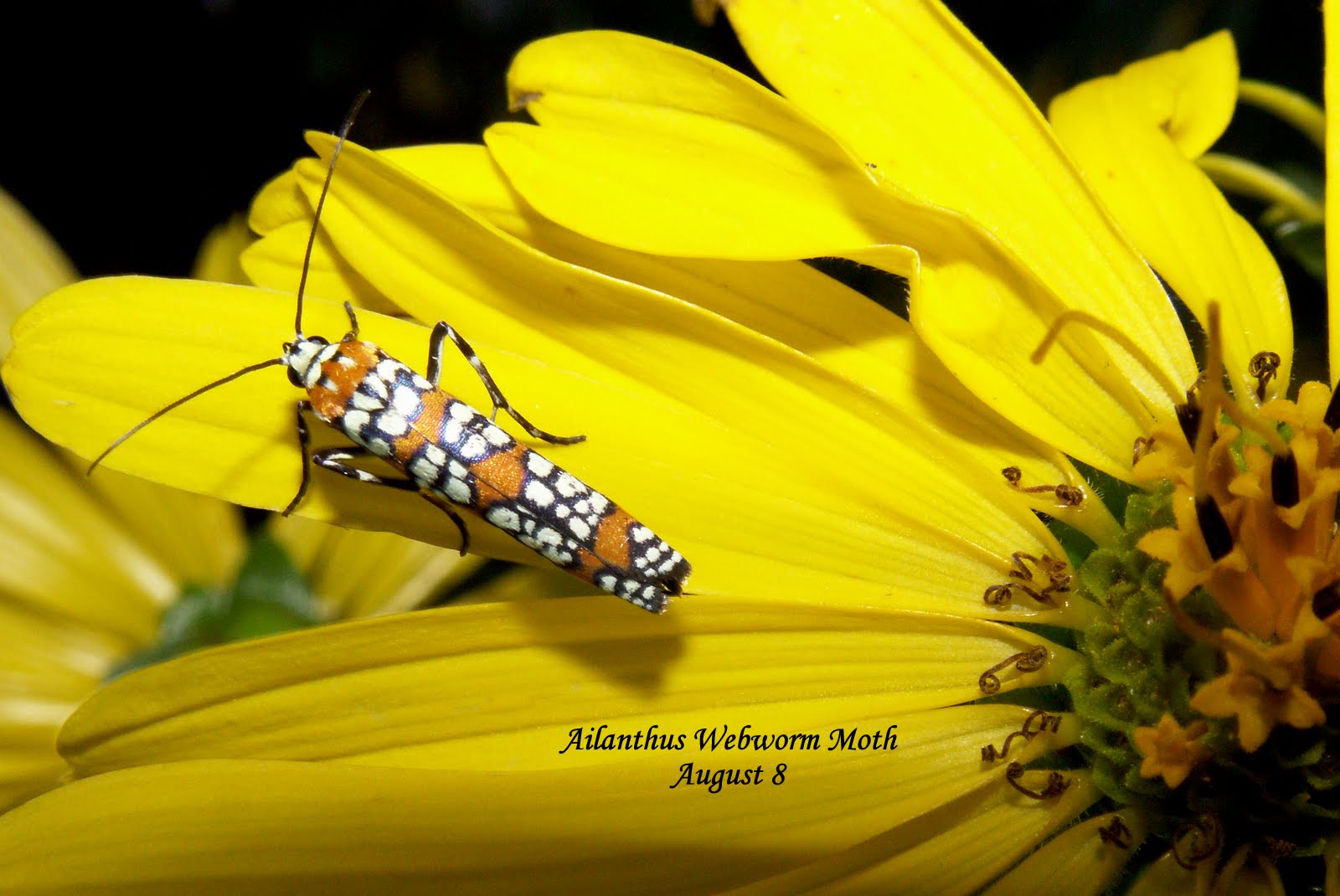
An Ailanthus Webworm Moth finds a place to rest for a while. Those moths fly during the day and are colorful enough to be beetles or butterflies - don't you think?


Our Virginia state insect, the Eastern Tiger Butterfly, loves Cup Plants


Here's the underside of a female black form Eastern Tiger.


I've tried to capture some of the beauty that has currently burst into Wildwood, but you really need to follow the main bike path through the center of the Park and see it first-hand!


Be sure to also visit the Wildwood Park website to get a look at the wide diversity of plants and critters that make Radford their home. Just click on the link below:


Tuesday, July 10, 2012

Winds in Wildwood: Bad News and Good News


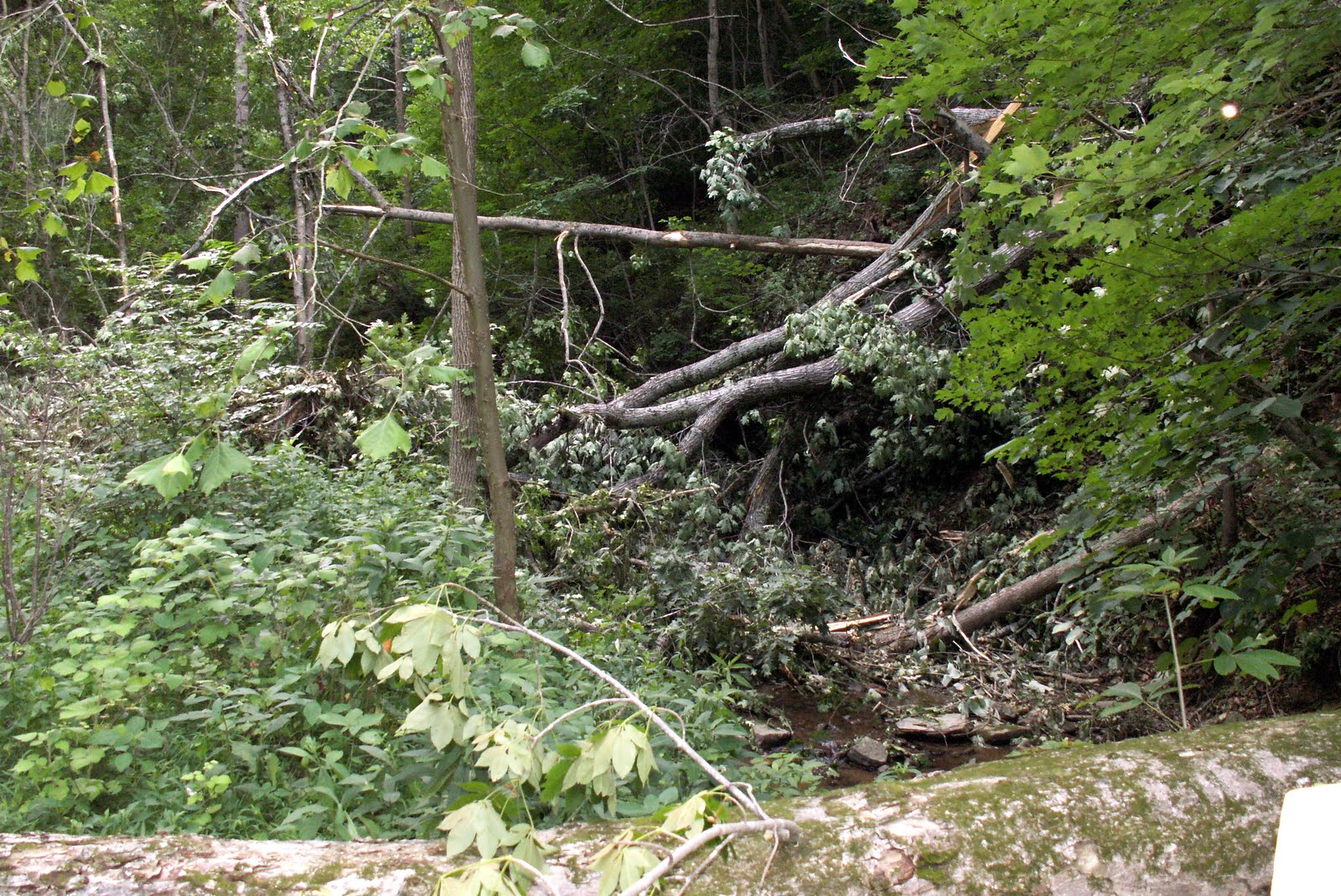
The wind storms the last weekend in June, 2012, caused quite extensive damage to the large trees that had grown in Wildwood Park for many years. Very old, very large trees were brought down with what must have been loud shattering cracks of sound. Much of this occurred on the west slope and many tree tops now lie in the creek that flows through.


As I started walking across the upper west slope at the trail head behind Bobcat Stadium, I had a more open view than usual of the bike path below because limbs and trees had been blown to the ground. 


One of the most dramatic sights was a HUGE (perhaps 10 feet in diameter!) disk of roots and dirt that met me when I came around a slight turn in the trail. 


Then I looked directly down to see that the hard dirt path under my feet had opened up just a few steps beyond to a gaping hole with large slabs of rocks on it. 


My camera could not fully capture the impact this sight made on me.

On the eastern slope, winds caused the top portion of a big tree beside the Grand Staircase to fall to the ground bringing with it a very large bee community.


Large slabs of honey comb were strewn on the forest floor as the tree splintered on impact. What a sad way for those little critters to have to break-up housekeeping.


Oh, I did promise some good news - It is very interesting and heartening to see what wasn't damaged: Before the winds, a huge old tree grew at the end of a wooden footbridge in the middle of the park. Its roots seemed to reach out to invite hikers to cross the bridge and explore the cool, dark forest. That tree was uprooted, but it fell to the side and missed hitting the bridge and a message board kiosk beside the path to the bridge! Limbs did have to be cleared from the bike path.


Losing so much of the shade that cooled the western slope will surely make a difference in the plants that grow there.  Those that thrive in less light will perhaps die out or grow in outer places. However, those that enjoy the sun’s warm rays may flower and grow hardier. The animal life will, of course, also change. 
We will have to wait patiently and observe.

Monday, May 14, 2012

Hey, Lady! Take My Picture!

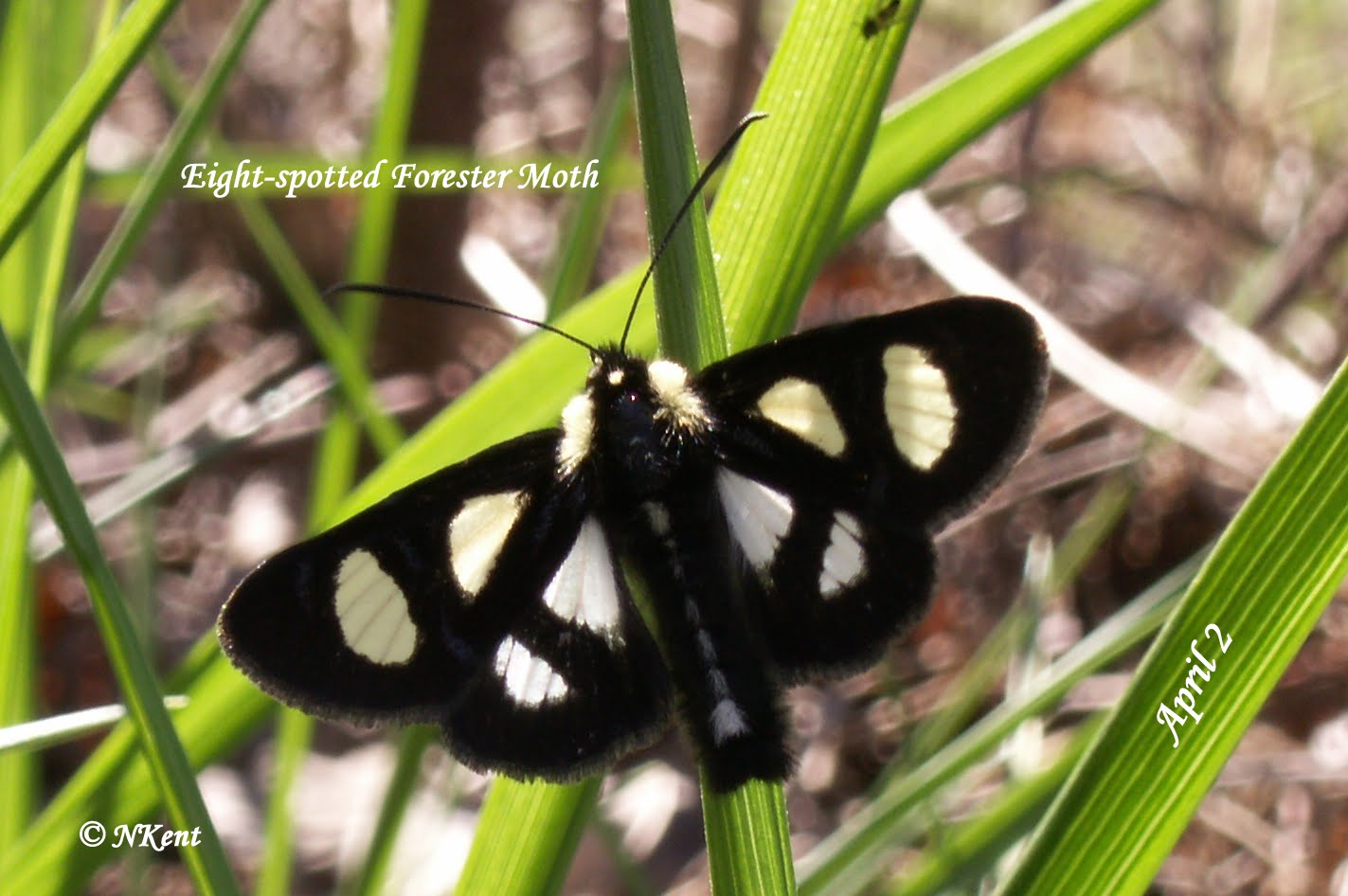
One pleasant April day, as I roamed around under the power lines at Eighth Avenue, I realized that a flittery shadow was following me. Turning around, I saw that a small black butterfly with white spots had paused with its wings spread out to rest on a blade of grass.


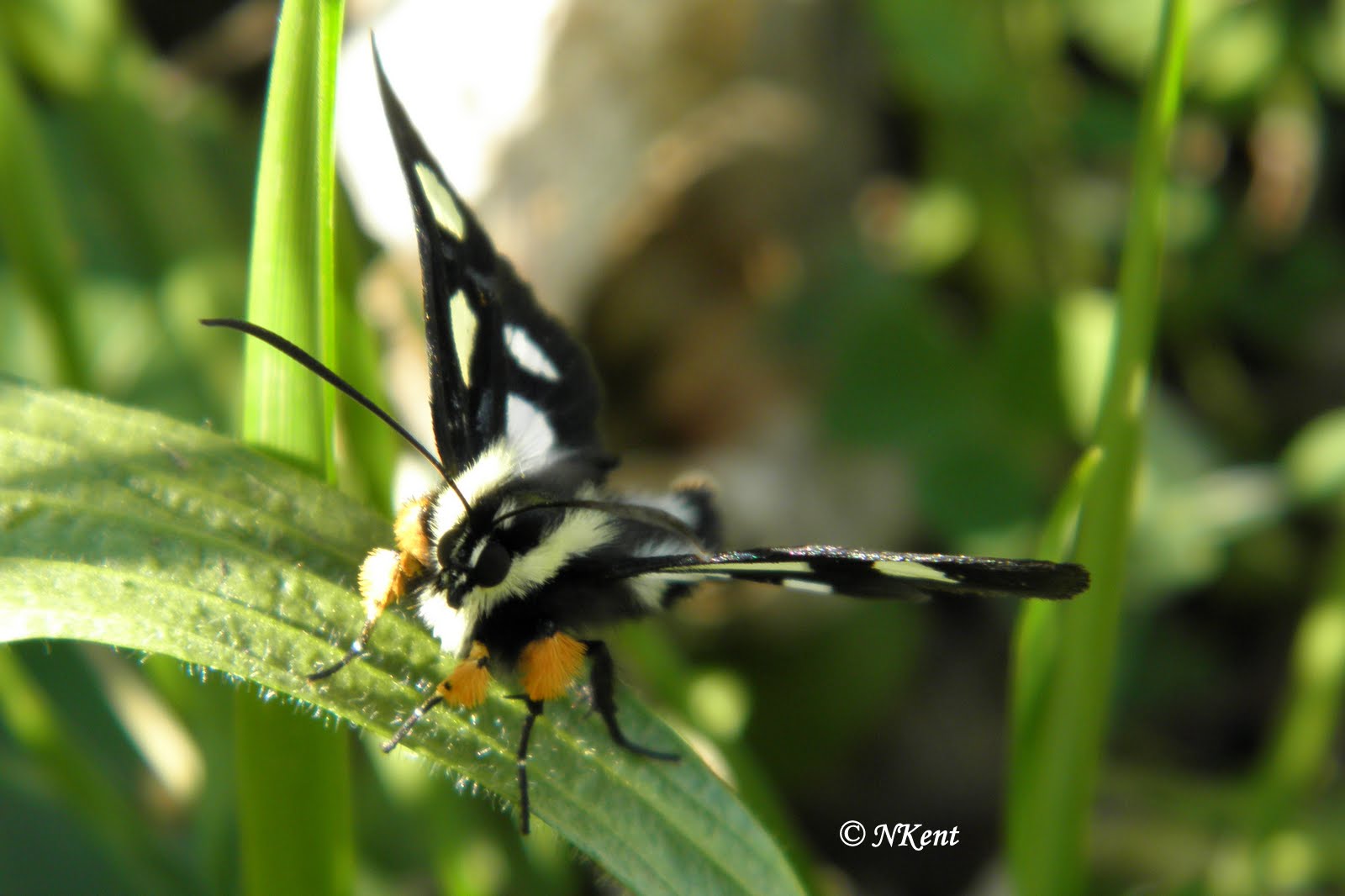
As I got a closer look, I realized that it was an Eight-spotted Forester Moth (Alypia octomaculata), an old friend that I had seen last year. It flew up and away but landed on another stem of grass close by. It seemed to want me to take its picture and to be sure that I got a good shot of its vividly orange, fuzzy "boots". (I found out later that what looked like fuzz was actually scales similar to the covering on its wings.)


                                   "How about a close-up of my face? And my boots, of course!"


"The undersides of my wings look handsome too."


"Do I look like an airplane getting ready for take off?"


"See how tightly I can hold on to the grass!"


"Well, its time for me to explore another patch of grass. Maybe I'll see you again soon. Be sure to have that camera ready to get pictures!"


You know that I'll be ready.


Sunday, March 18, 2012

First Nest Box Survey for Brown-headed Nuthatches

On March 12th Ray Callahan, Len DiIoia and I checked eight nest boxes in the Radford Arsenal to see if there was any nesting activity. Five of the boxes we had put up in pine woods last fall were filled with pine shavings and three were empty.

None of the boxes showed any sign of nesting material placed in the boxes, although one of the boxes with pine shavings seems to have had some critter (a small bird, or maybe a mouse) scratch, or dig into the shavings.

We put shavings in some of the boxes because chickadees, titmice, and nuthatches will sometimes select these over empty boxes --- perhaps so they get the feel of excavating or enlarging a nesting cavity, so to speak.

Anyway the target species for the nest boxes is the Brown-headed Nuthatch, a species known only to reside year round at one location in the Ridge and Valley region of Virginia, and that site is at the Radford Arsenal. There are many acres planted in Loblolly Pine on this property and likely the birds feel perfectly at home, since this habitat resembles the pine forests of more southern locations in the Piedmont and Tidewater sections of the southeastern US. Nesting has been observed there in previous years, and the species has been residing on the property for at least seventeen or so years.

At the first box we checked we did hear one Brown-headed Nuthatch making squeaky rubber duck like sounds, about fifty to seventy-five feet from the box. At two other boxes we heard vocals from Carolina Chickadees nearby.

We hope to go back soon to check the boxes again, and maybe this time we will find some of them being used for nesting. I hope that on later reports to have some pictures of the nest boxes and of some of the birds we see during our surveys.

Here is the bird tally we had for the afternoon:


Gadwall 5
Mallard 1
Ring-necked Duck 11
Hooded Merganser 1
Wild Turkey 21
Turkey Vulture 4
Red-tailed Hawk (Eastern) 3
Ring-billed Gull 1
Eurasian Collared-Dove 2
Mourning Dove 5
Red-bellied Woodpecker 2
Northern Flicker (Yellow-shafted) 2
Eastern Phoebe 1
Blue Jay 2
American Crow 20
Carolina Chickadee 6
Brown-headed Nuthatch 4
Carolina Wren 1
Ruby-crowned Kinglet 1
Eastern Bluebird 9
American Robin 126
Northern Mockingbird 1
Cedar Waxwing 63
Pine Warbler 22
Yellow-rumped Warbler (Myrtle) 27
Eastern Towhee 1
Field Sparrow 1
Song Sparrow 9
Dark-eyed Junco (Slate-colored) 10
Northern Cardinal 2
Red-winged Blackbird 2
Eastern Meadowlark 2
Common Grackle 2
House Finch 4
American Goldfinch 1

Saturday, February 25, 2012

A Winter Wonderland

When I woke up Monday morning and saw all the snow in our  yard, I knew that
I wanted to get my camera to Wildwood as soon as possible.
Arriving at the Main Street entrance, I was disappointed to see that it had not gotten
 cold enough to freeze the water that is always dripping from the tufa cliffs.


My disappointment, however, was short-lived as I walked into the park and down Wildwood Drive.


Sunday night's heavy, wet precipitation had penetrated the trees' canopy of branches-leaving everything,
yes, everything covered with a sparkling blanket of white.


Aaahhh,
this was more beautiful than I had imagined!


I looked up as I approached the North Bridge.

Another "aaahhh" !


Crossing the bridge, I walked toward the tunnel, trying to absorb all the exquisite white surrounding me.


After turning around I continued to wander, enjoying the crisp air and the blue sky.


All too soon, I was at the Park Road parking lot and turned to get one more shot and
one more deep breath of a simple and profound joy.


Monday, February 20, 2012

Radford Roosting Festival

Saturday morning, February 18, was a splendid day to be out looking for birds!
About 25 folks joined Clyde Kessler to listen and look for them in Wildwood.
The group saw and/or heard 25 different species including yellow-rumped warblers, bluebirds, chickadees, titmice, towhees, cardinals, blue jays, crows, woodpeckers (A pileated one stayed in view for several
 minutes as it flew from trees to the ground and back.), robins, wrens, song sparrows, 
phoebes, white-breasted nuthatches, a junco, a mourning dove, and flying high above our heads:
a red-tail hawk, a turkey vulture, and an immature bald (probably) eagle!


Activities for the Festival continued at McHarg Elementary School on Saturday afternoon.


Youngsters enjoyed making treats to hang outside for birds, making their own bird books, 
and dissecting owl pellets, as well as other fun activities.


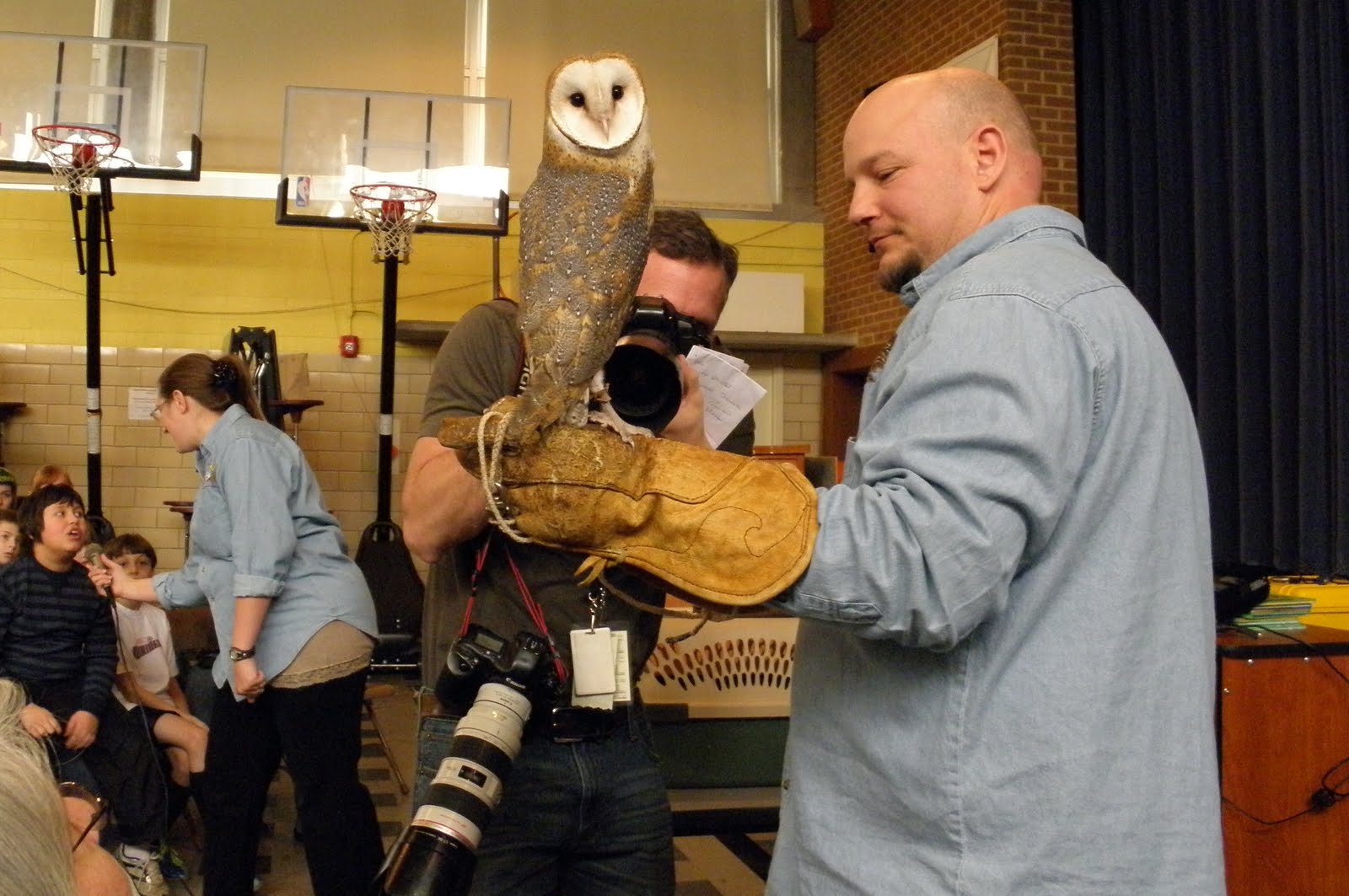
Veterinarian Philip Bailey and his wife rescue injured wild birds and brought
a few of them to show the audience. In the above photo, he is holding an American kestrel, 
which is a falcon that is about the size of a blue jay.


The man with the camera who is talking to Dr. Bailey while he holds a barn owl is
Kyle Green, a photographer with the Roanoke Times.
The barn owl is one of Dr. Bailey's hunting birds.
You might want to try to find out more about falconry and the sport of hunting with birds.


As Kyle Green lifted his camera to get a shot, the bird turned its head 
all the way around to look at me and my camera. I was amused 
because animals usually turn their face away from me as soon as
I get my camera ready for a good shot!


This little screech owl had been injured and rehabilitated by the Baileys and
was ready to be released back into the wild. It was taken outside to the edge of
the woods behind McHarg.


It fluttered it wings.


And then flew to a nearby tree.


I was very pleased to see how well it was camouflaged among the brown leaves
still in the tree that it chose. That should help it have a better chance to survive.


Friday, February 17, 2012

A Weekend for the Birds: February 17 & 18

Radford will hold its 5th annual Roosting Festival this weekend.
Once again we have the opportunity to become better acquainted with Wildwood's wonderful
feathered friends.
Clyde Kessler will lead us through the park and help us listen and look.
Perhaps we will see sparrows:


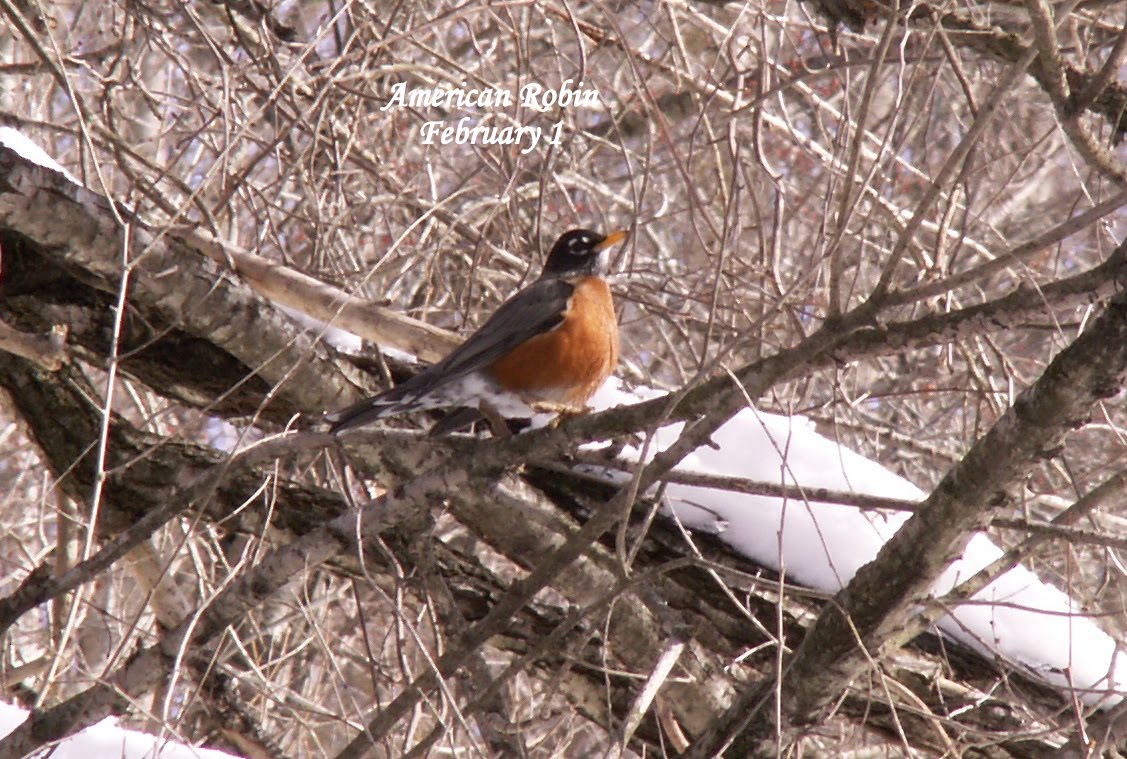
Maybe robins:


Bright red cardinals are easy to see:


 Towhees sometimes like to hide from us:


Blue Jays like to scream at us!


Clyde will help us know who the birds are and where they may be singing and feeding.
Meet at the Park Road parking lot at 9:00am Saturday, Feb.18, to begin the hunt.

Events this weekend include
a movie, Winged Migration, in the McHarg Elementary School Multi-purpose Room
from 7 - 9 pm Friday night, Feb. 17.
The Bird Walk beginning at the Park Road parking lot at 9:00 Saturday.
Lots of activities at McHarg School on Saturday afternoon 1:00 - 5:00.
See you there!